I’m in the process of putting together a report of the results of the project. In the meantime, I thought I would share some more of the interesting items that I encountered while performing the survey. I have little more than basic bibliographic information on these items. At least five languages are represented in the collection, so most of the time I can’t even read the text. My comments here are cursory and represent the information that I could glean just by examining either the item or its illustrations.
In a collection of travel literature, I think it is fitting to show some travel-friendly reading. In the past year, it seems that every ebook reader has touted mobility as a big feature. Well, books have provided super-mobile reading for over 400 years! Here are two of the smallest items from the collection of European travel literature at the RBC. When I snapped these pictures, I didn’t have a ruler to illustrate the size of each volume – so I used my cell phone as a visual reference. The first is a volume from 1619 by Pomponius Mela, titled De sitv orbis libri tres.

The text size is a bit difficult to read, but it would fit in your pocket better than a Kindle! The next tiny item is The Hibernian Atlas from 1775 by David Williamson.

This item is really amazing. It describes the counties of Ireland and features tiny, colored maps (one example below). All text and illustrations are completely done in manuscript. The pictures do not do it justice – I apologize for the blurriness.

Deviating from the topic of tiny books, another book in the collection caught my eye because of the evidence of its reception and use. The bibliographic information I have from the survey says it is a volume from 1646 by Commelin. The work documents voyages by the Dutch East India Trading Company and the native peoples, animals, and vegetation that the sailors encountered. The title page appears below. At some point in this volume’s long life, the illustrations have been censored. The engravings depict the native peoples in their traditional dress. Images showing women with exposed breasts have been heavily inked. The ink is now a dark brown color. The two images below will illustrate this method of censorship.

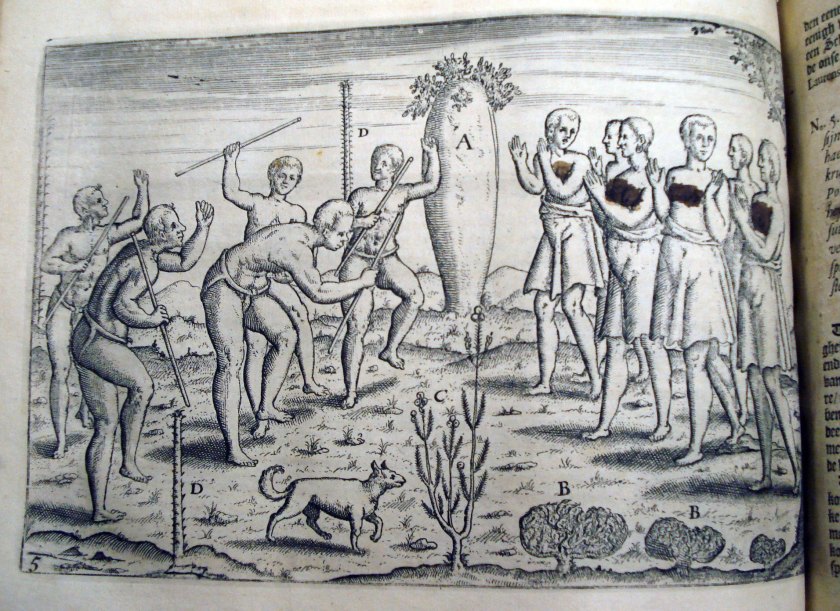 On certain pages, offending images are gone. I cannot determine if they were physically removed from the page by the censor or if this is the result of ink corrosion. Engravings with these lacunae were later repaired with paper. The white shape on the following image is an example of one of these repairs.


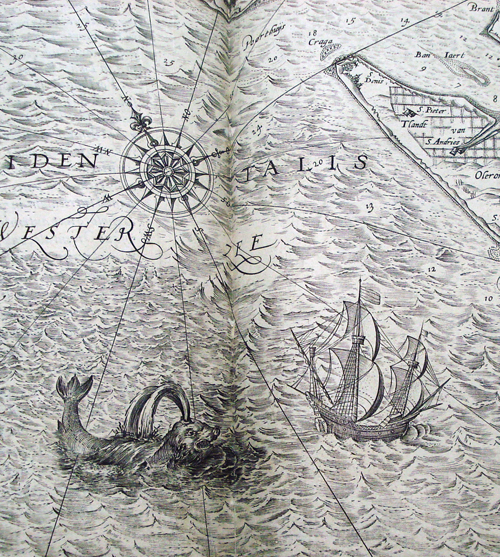
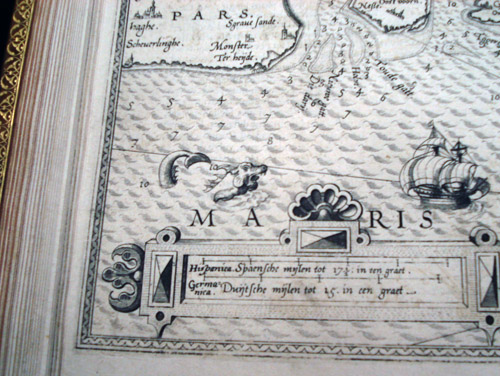
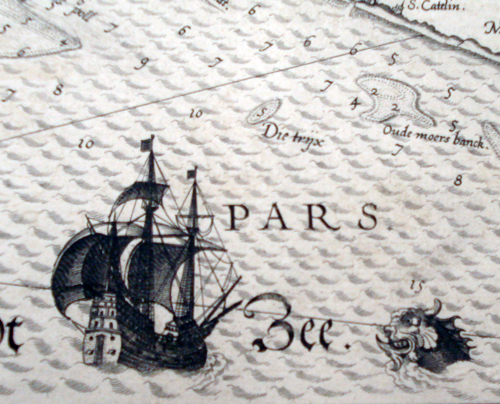

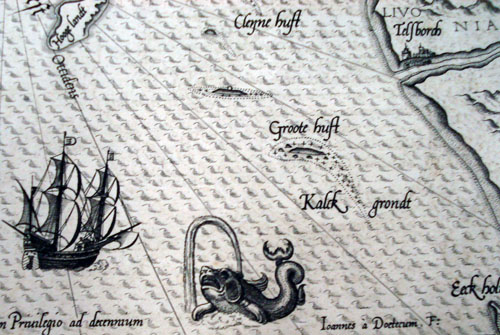


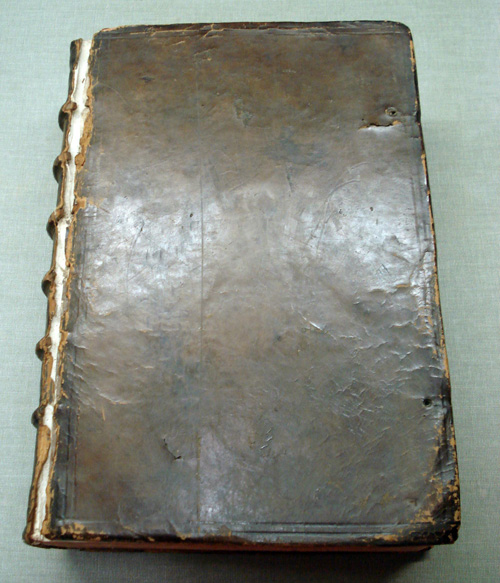


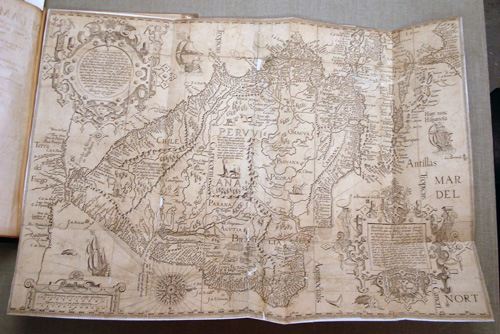
 This particular map, when unfolded, is approximately six times the size of a normal (quarto sized) page in the book. Anyone who has used a large road map will recall the difficult (and sometimes violent) process of unfolding and re-folding large sheets. At times the size and nature of the folds are not immediately obvious, leading the user to pull too soon or in the wrong direction and tear the page. This complicated process is only made worse if the map you are trying to view is tipped into a book! Items in this collection consistently exhibit tears in the same position as in the example above due to the stress placed upon the paper. Damage to these foldouts also regularly occurs along the folds and at the point where two folds cross.
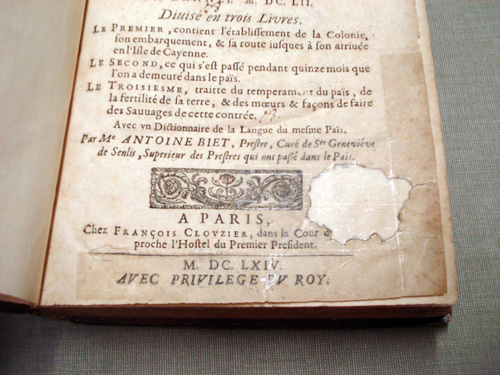


 Work of the Hand