Tools and Tooling

Tools, Writing

I promised to put up an example of some more refined tooling. Here is my finished plaquette (in a slightly blurry photograph):

The design is pretty much dictated for the assignment and is meant to demonstrate specific techniques. The border and top panel illustrate blind tooling with lines and dots. The second panel has three circles to demonstrate blind and gold tooling with a gouge, as well as an onlay with a gilt edge. For the white circles, I used alum tawed goat skin. This proved to be significantly more difficult to do than tanned skin, as the tawed skin gets spongy when pasted out. As a result, the gilding around the edge is not as flat (making the gold less reflective) than it would be had other leather been used for the onlay. The third panel down illustrates blind and gold tooling and onlay work as well. These diamond shapes are actually made with two impressions – the tool is an equilateral triangle that can be turned and doubled up. The central diamond is entirely an onlay with gilding. The two on either side just have onlays in the central part of the shape. The fourth panel from the top has a curvilinear line made with an Ascona tool and has alum tawed skin laid into the impression. The final panel demonstrates gold tooling through repetion of lines and a small square tool.

In the week following Standards, Jeff Peachey came to do his workshop again. As a second year, my main focus during the workshop was to modify a Stanley No. 151 spokeshave for leather paring.
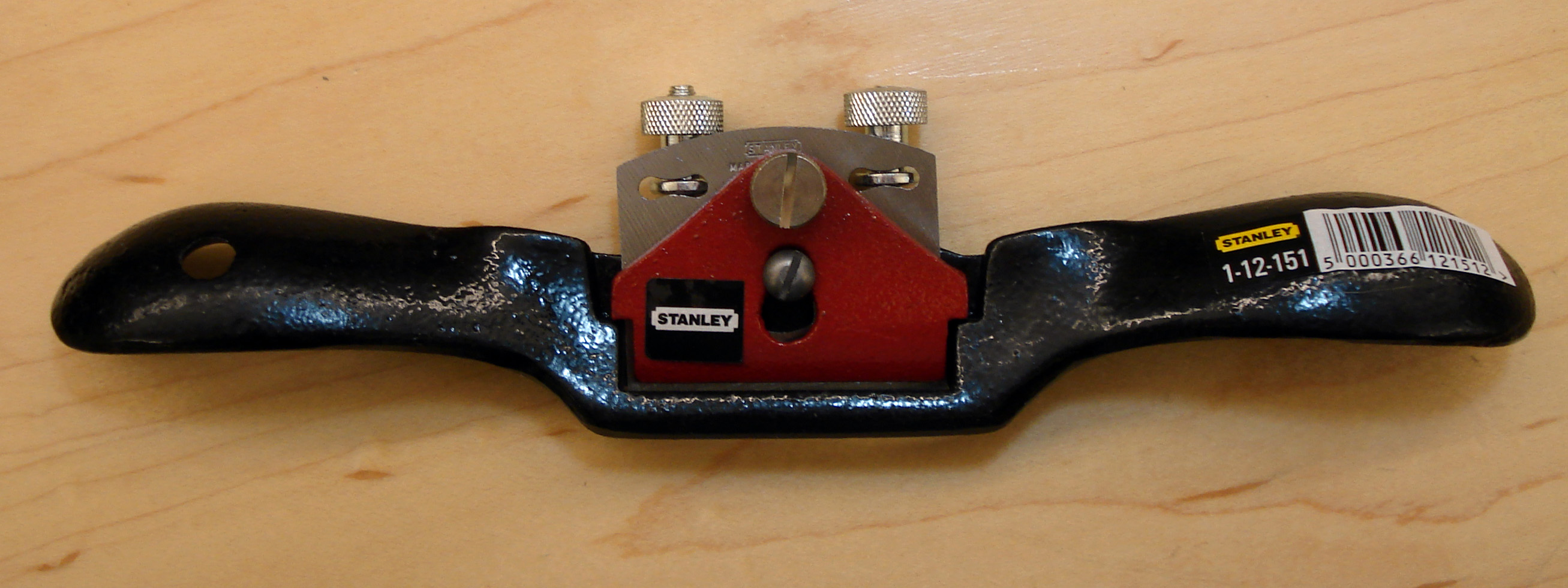
This was not an easy procedure, and I’m very glad that Jeff was there to keep me from completely ruining mine. Peachey has a rather extensive essay about spokeshaves that includes a bit of a history lesson, instructions for the modifications, and links to other articles on the topic. Well worth the read.

During the workshop, I also had time to make a much larger English-style paring knife from an A2 steel blank. I am quite pleased with the result.

The handle is made from water buffalo horn that is mounted with brass screws and epoxy. I also made a horse butt sheath for it.

Finally, I’d like to point to an article that I recently wrote for Archival Products News about a scrapbook rehousing project. During my summer as a Lennox Foundation intern at Iowa State University, I went on a tour of the Archival and University Products facilities. I had a really great experience there, so when Janice Comer asked me to contribute something, I was happy to do so. You can read that article (in PDF form) here.

Ω

I’m still working on my post about German paper bindings. Soon to come…

Standards 2011

Bookbinding, Conferences

The Guild of Book Worker’s annual Standards of Excellence in Hand Bookbinding conference was held at the Park Plaza Hotel here in Boston this past weekend. Overall, an excellent time was had by all. I volunteered to assist throughout the conference and was able to see two demonstrations and meet a host of bookbinders and conservators whom I greatly admire. It was a good opportunity to stock up on supplies for the school year and got me fired up to experiment with some new materials and structures.

Each year the guild gives out several awards and the second-year students were asked to make some portfolios for the certificates.

This is a simple structure that is done in two parts and offers a quick, but elegant enclosure for important documents. As first years, we had made this style of case before for the graduating second year students. My photos show both the portfolios fabricated for graduation and for the conference.

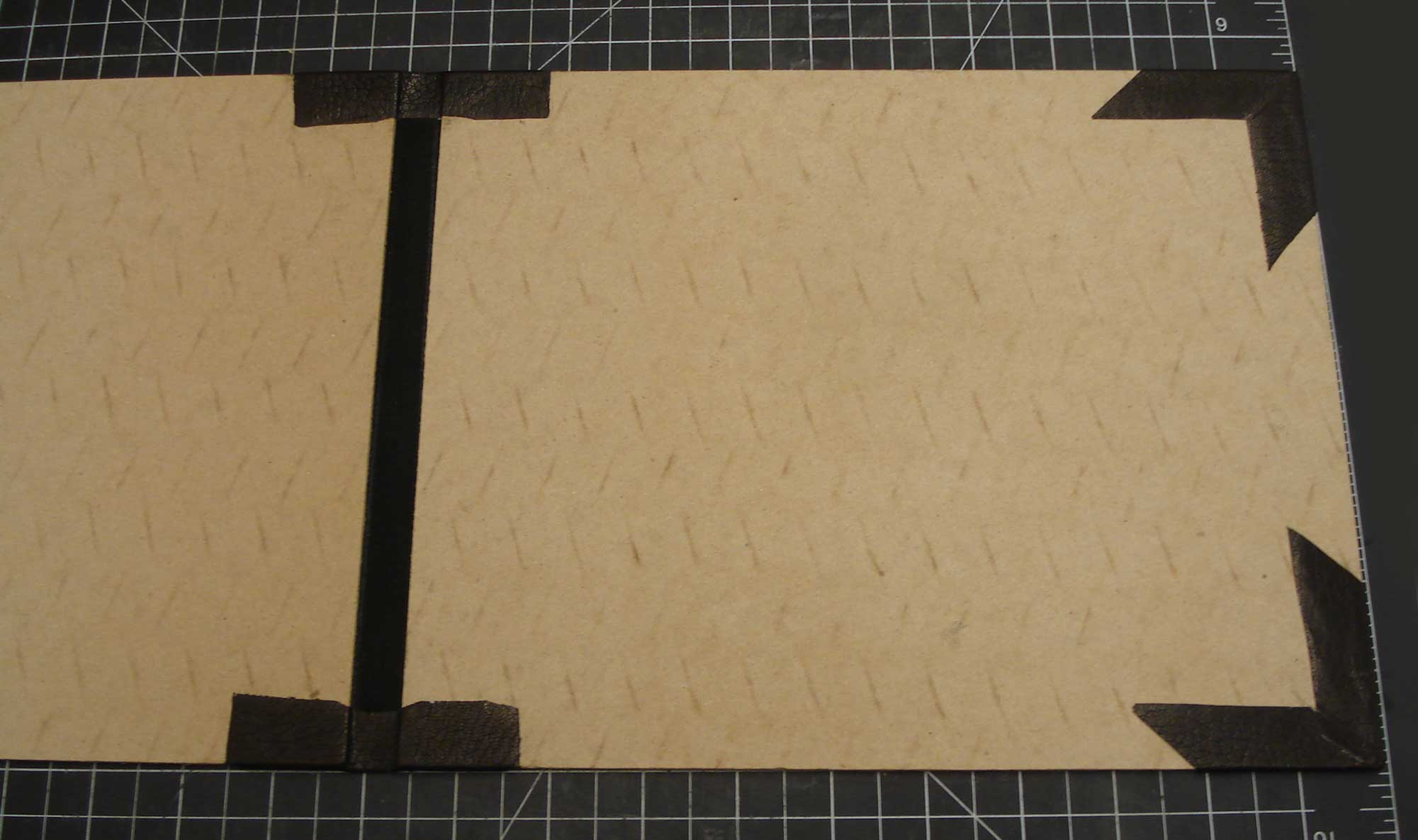
The outer case is made from Davey board, cut 1/2″ larger in the height and width than the document it will house. Any material may be used in covering, but we did these in either a quarter or half style with goat skin.

The spine strip and corners were flat pared to the thickness of the in-fill material, then the turn-ins further pared until they could hold a fold. The joint area of the spine is a also scooped out a bit at the headcaps so that the turn-ins will not show through the outside of the spine. They were pasted up and attached in the usual way.

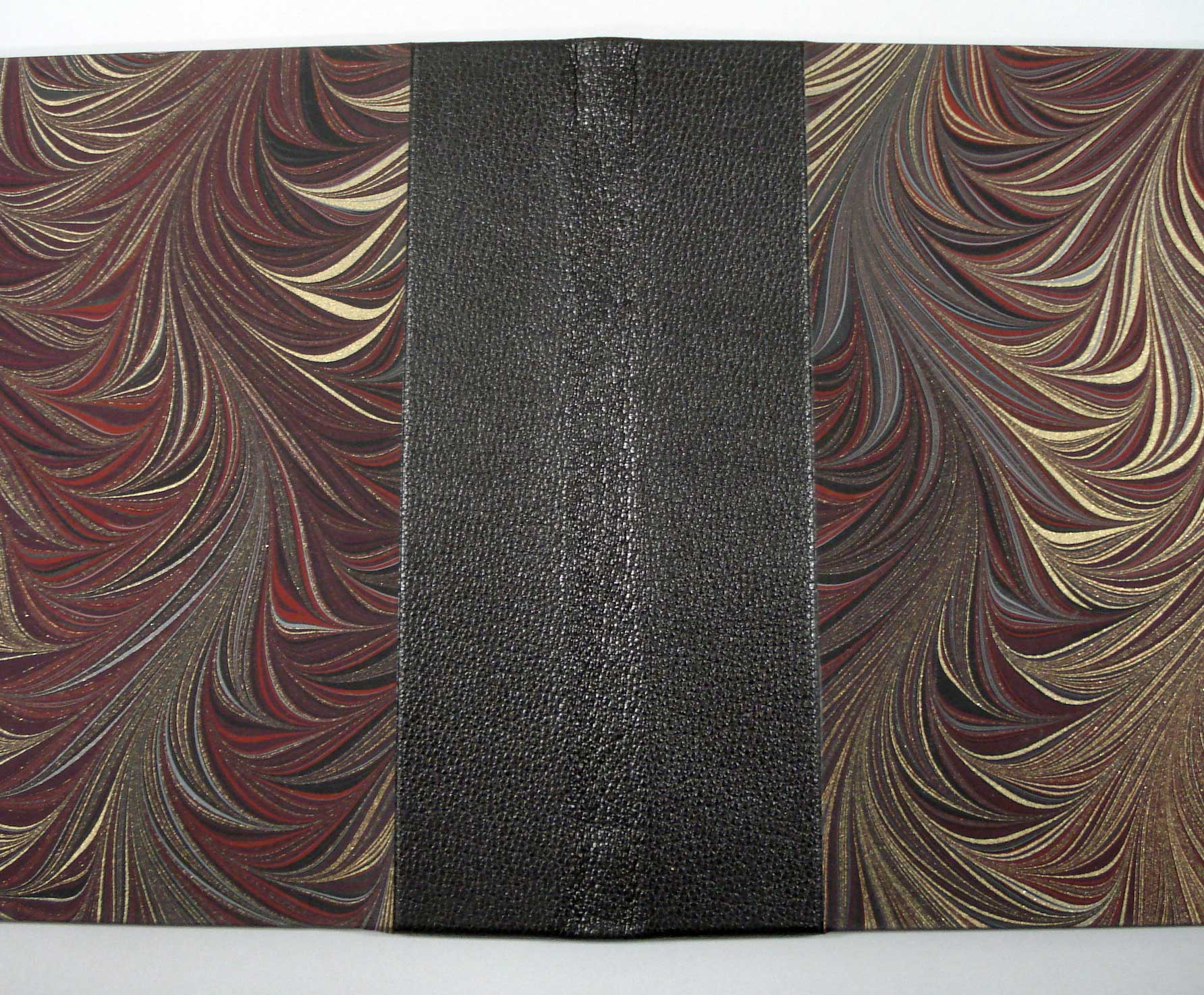
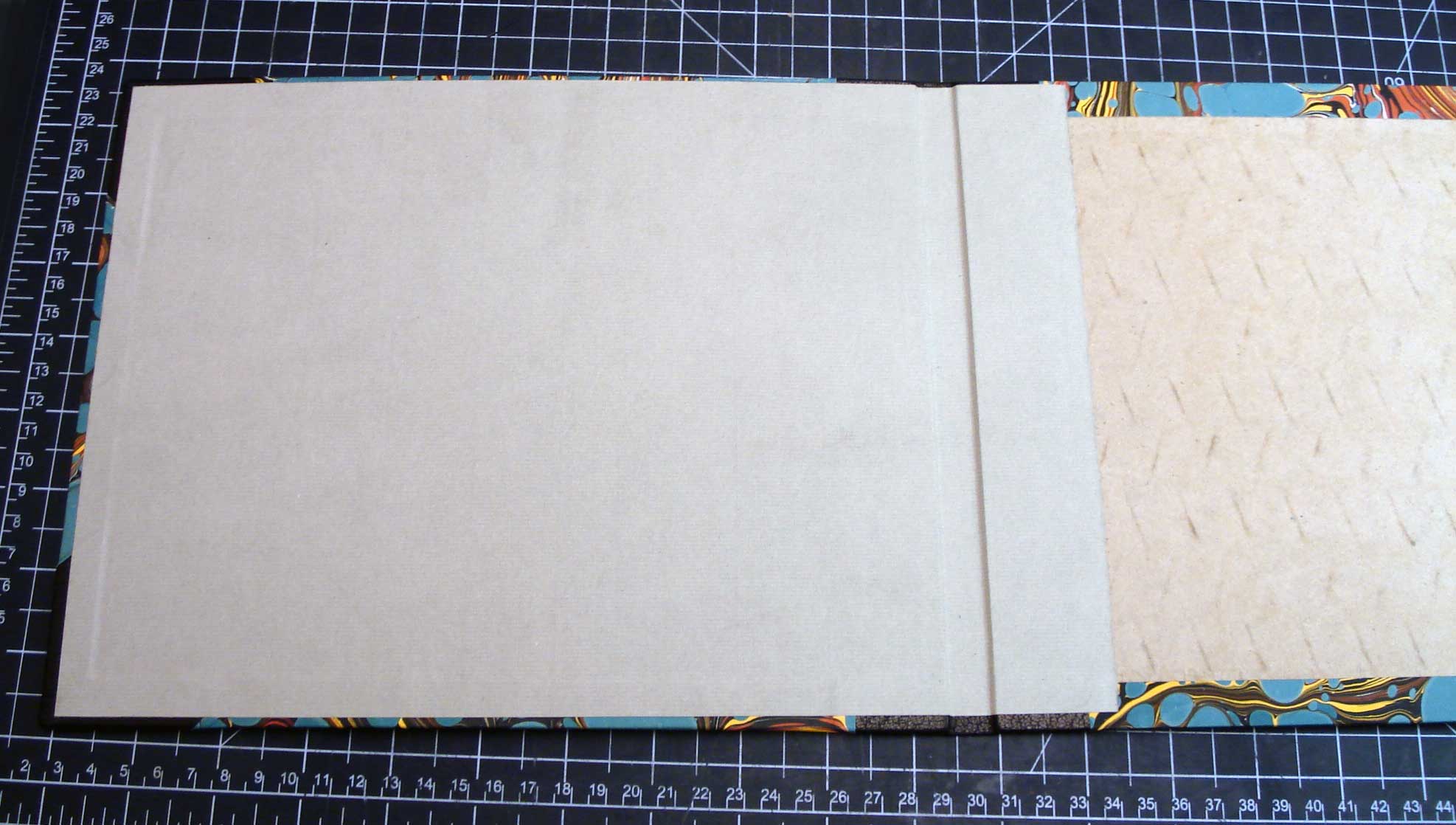
The outside of the boards are then filled with thin board or paper so that the whole surface was flat and the siding up material (in this case marbled paper) is put on.

In each case,  I cut the siding up material for each board from the same sheet, so that the marbling pattern was continued across the spine of the case.

The case was finished off by tooling a single blind line at the edge of the paper to give a nice, crisp edge.

After trimming out the inside, the pastedown can be done with either paper or cloth and is cut wide enough to cover the inside of the joint. Depending upon the lining of the outside of the boards, the inside can also be in-filled to counteract excessive pull.

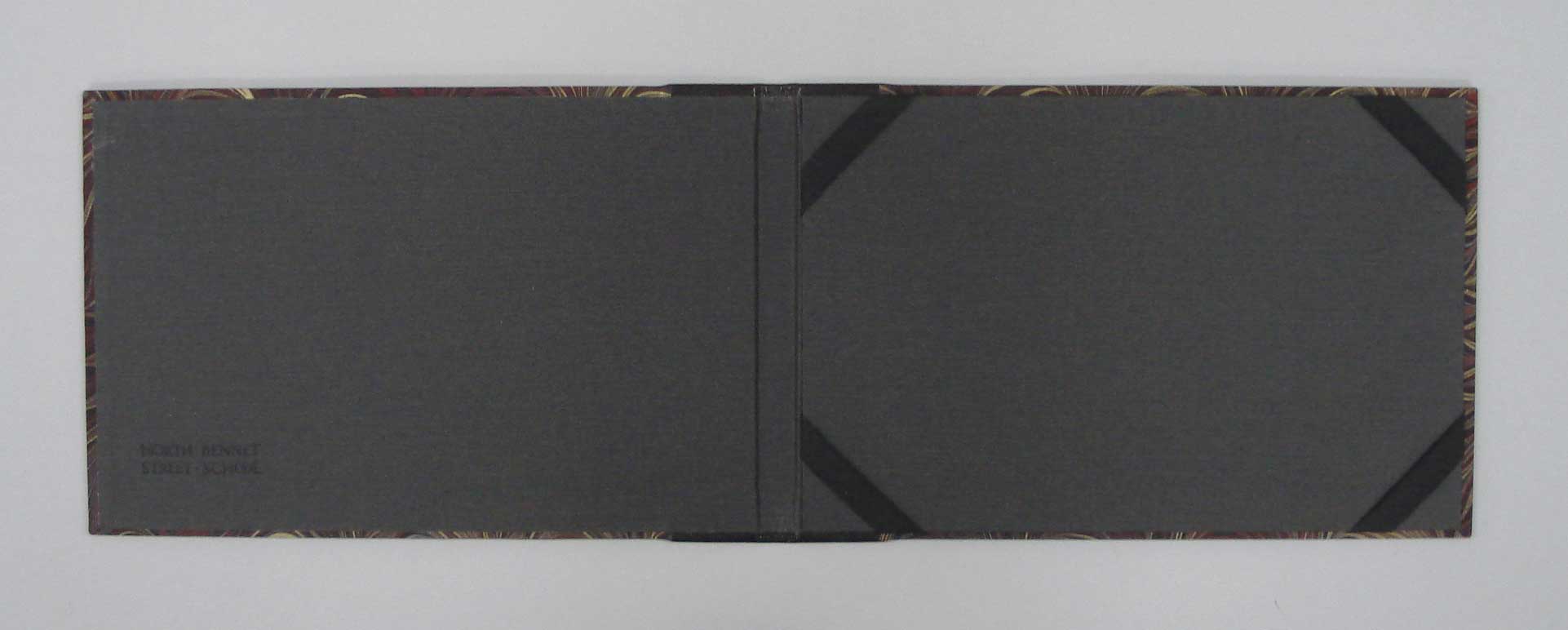
The second component of the portfolio is the back pad that holds the document. This is constructed of thin board (such as museum board) and is covered with the same material as the pastedown. Short sections of ribbon are glued to the back corners, and the whole thing is adhered to the inside of the back board.

At this stage, the case can be decorated or titled as desired. We used magnesium dies to stamp the guild logo in gold on the outside of the front board (see top) and the school logo  in carbon on the inside.

These portfolios are a good example of the ways that traditional binding materials and style can be adapted for uses other than the covers of printed books. With a little adjustment, this structure could probably be used for e-reader or ipad cases.

Ω