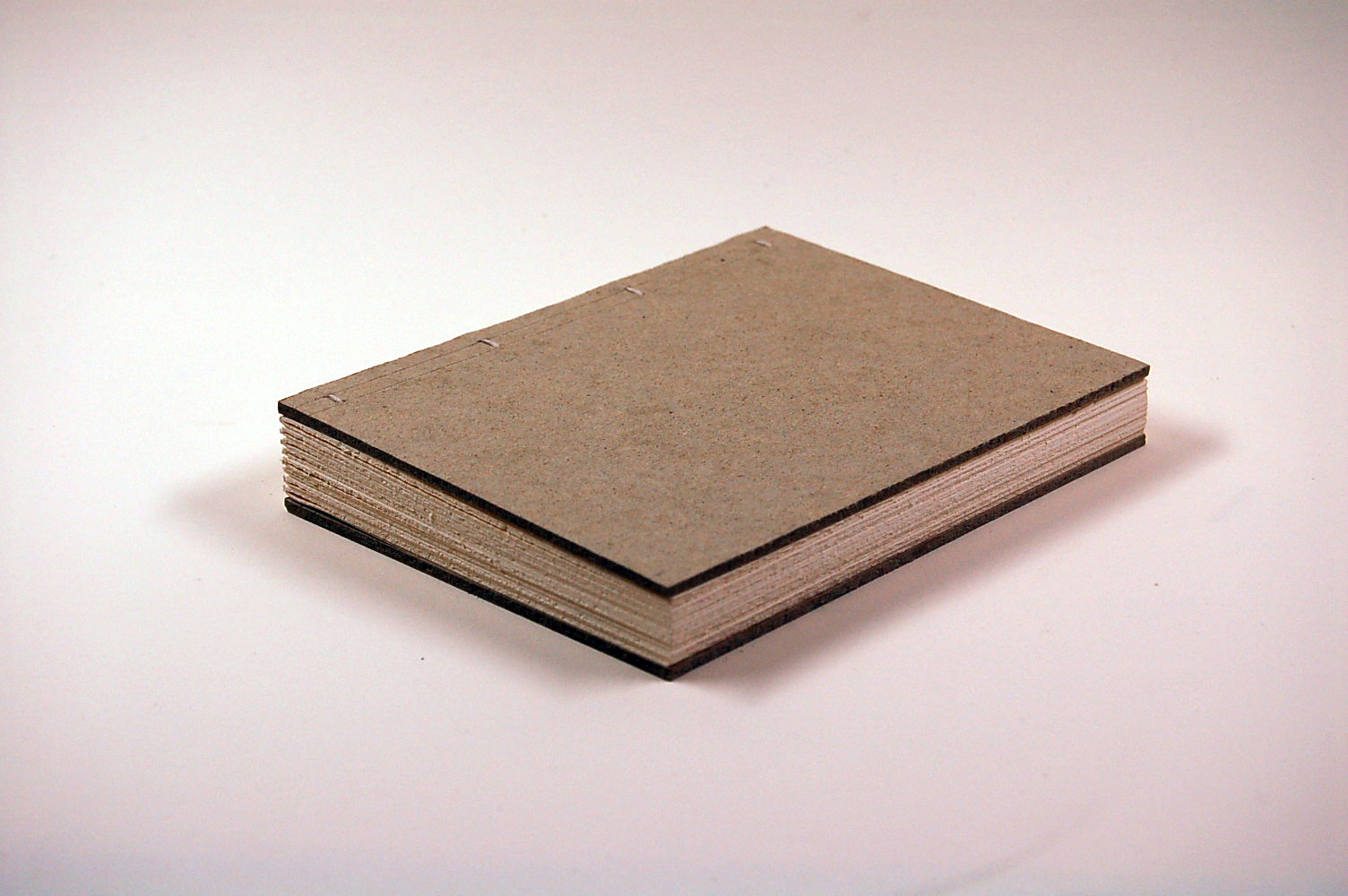
In the first few weeks of school, we started with non-adhesive structures. As one of the oldest known forms of the codex, it is fitting that we started with Coptic style bindings. These bindings have chain stitch sewing that laces through the board. The sewing is done through pairs of sewing stations with a needle on each end of the thread. All of these models (unless otherwise indicated) are made with Mohawk Superfine paper and Davey Board covers. The holes in the board were created with a pin vise. The first model was made with no decoration or embellishment to get a sense of the structure.
(Click pictures to enlarge.)
 In this style of binding, the boards are cut flush with the textblock. (Please forgive the crazy colors in these photos… I’m still trying to figure out how to set the white balance on the camera.)
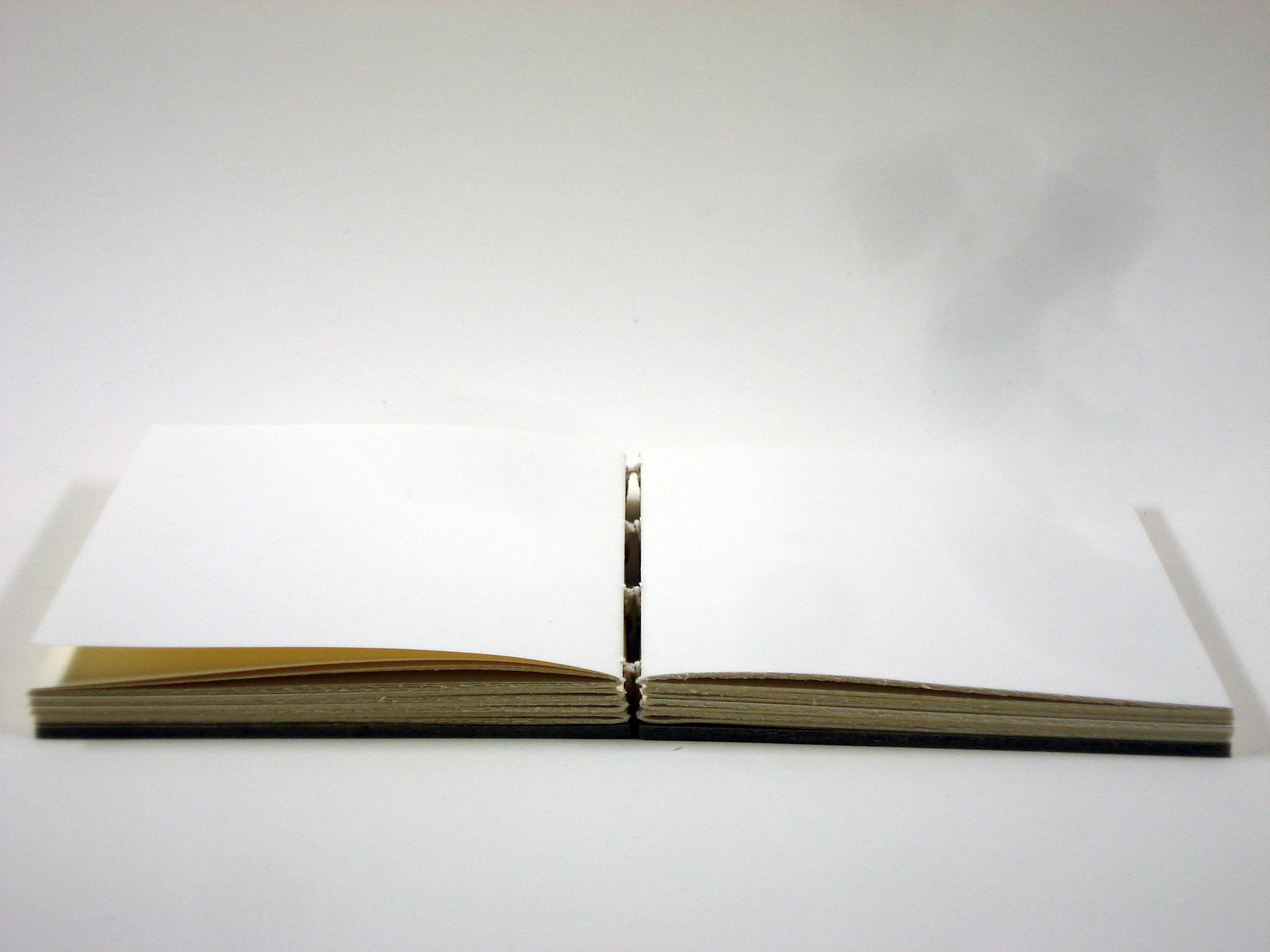
One of the benefits of this binding structure is that it opens completely flat.
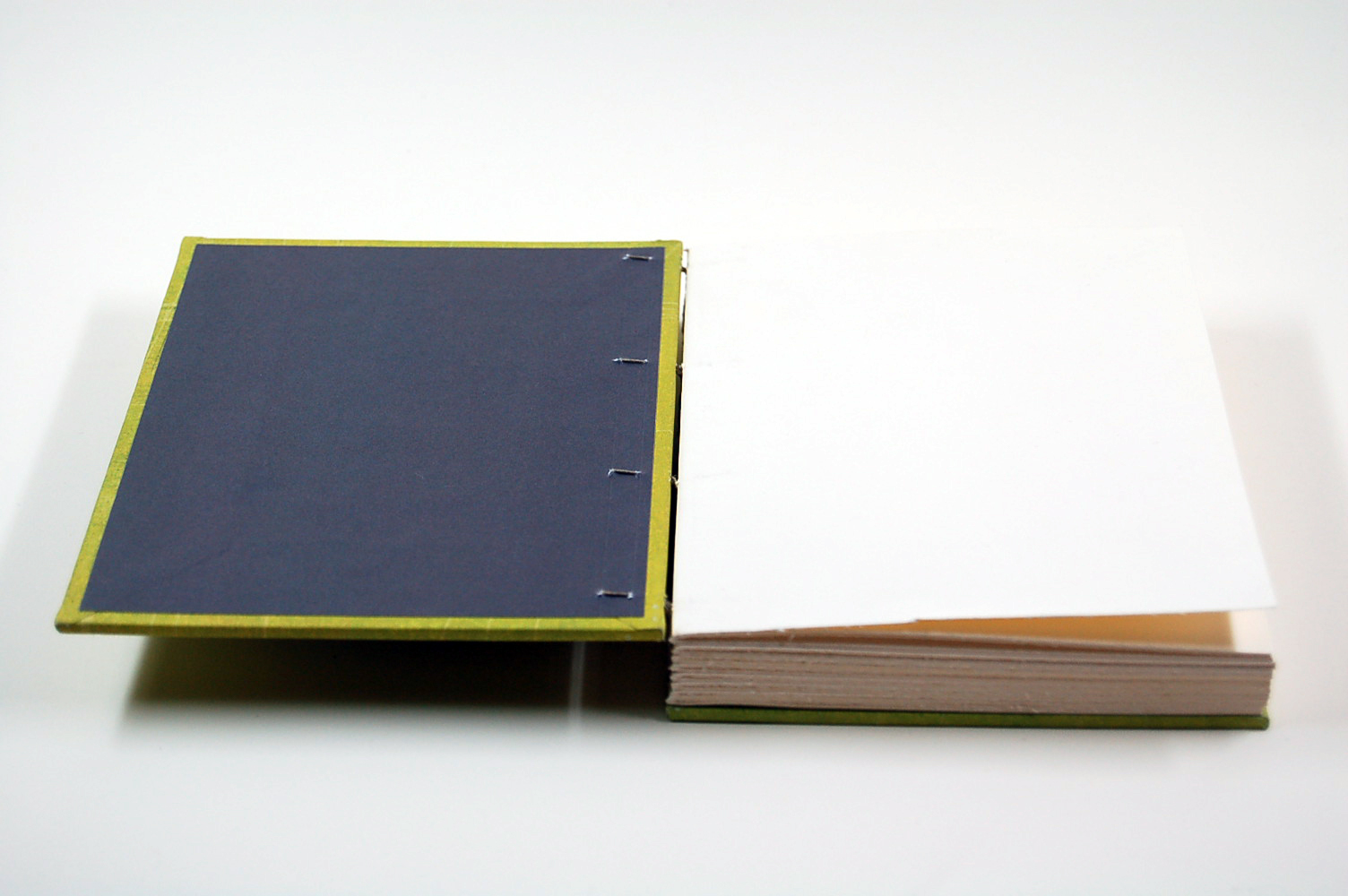
As with learning any new skill, practice and repetition are important – so I proceeded to make a few more of these. First with some decorative paper covering the boards…

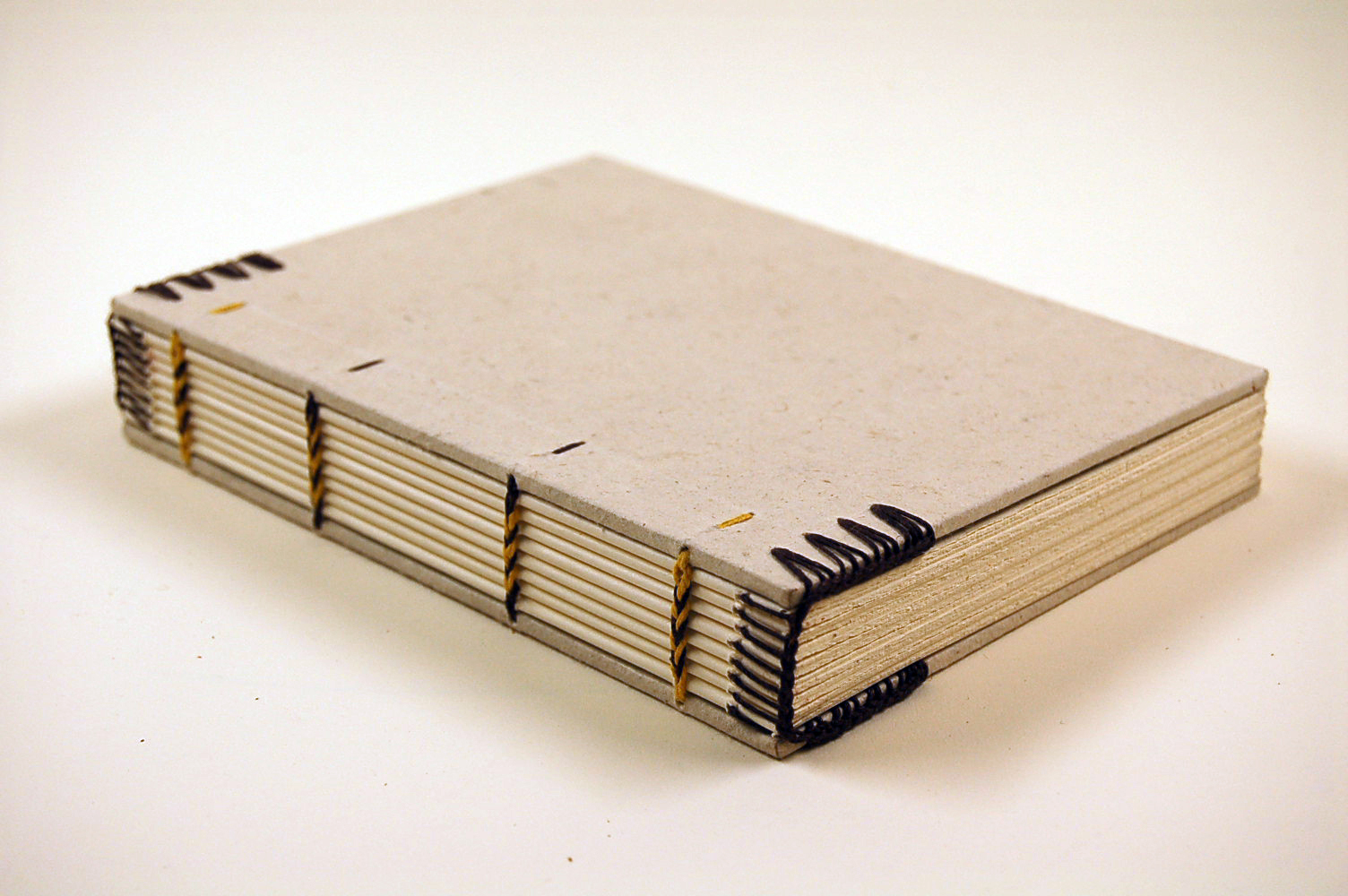
 … then with a Coptic-style endbands. With this one, I moved the outermost sewing stations in a bit and pre-punched the sections for the endbands. I followed Greenfield and Hille’s instructions and after only about 5 attempts, succeeded in creating something akin to a Coptic headband. However, just a day or two ago while rummaging around the shelves in the workshop, I found a model supposedly done by Adam Larsson (the conservator, not the hockey player) that has an absolutely amazing set of Coptic endbands with links that are way tighter than mine. So I’ll have to work on those.


Next I tried some variation in the color of thread to create a nice pattern.
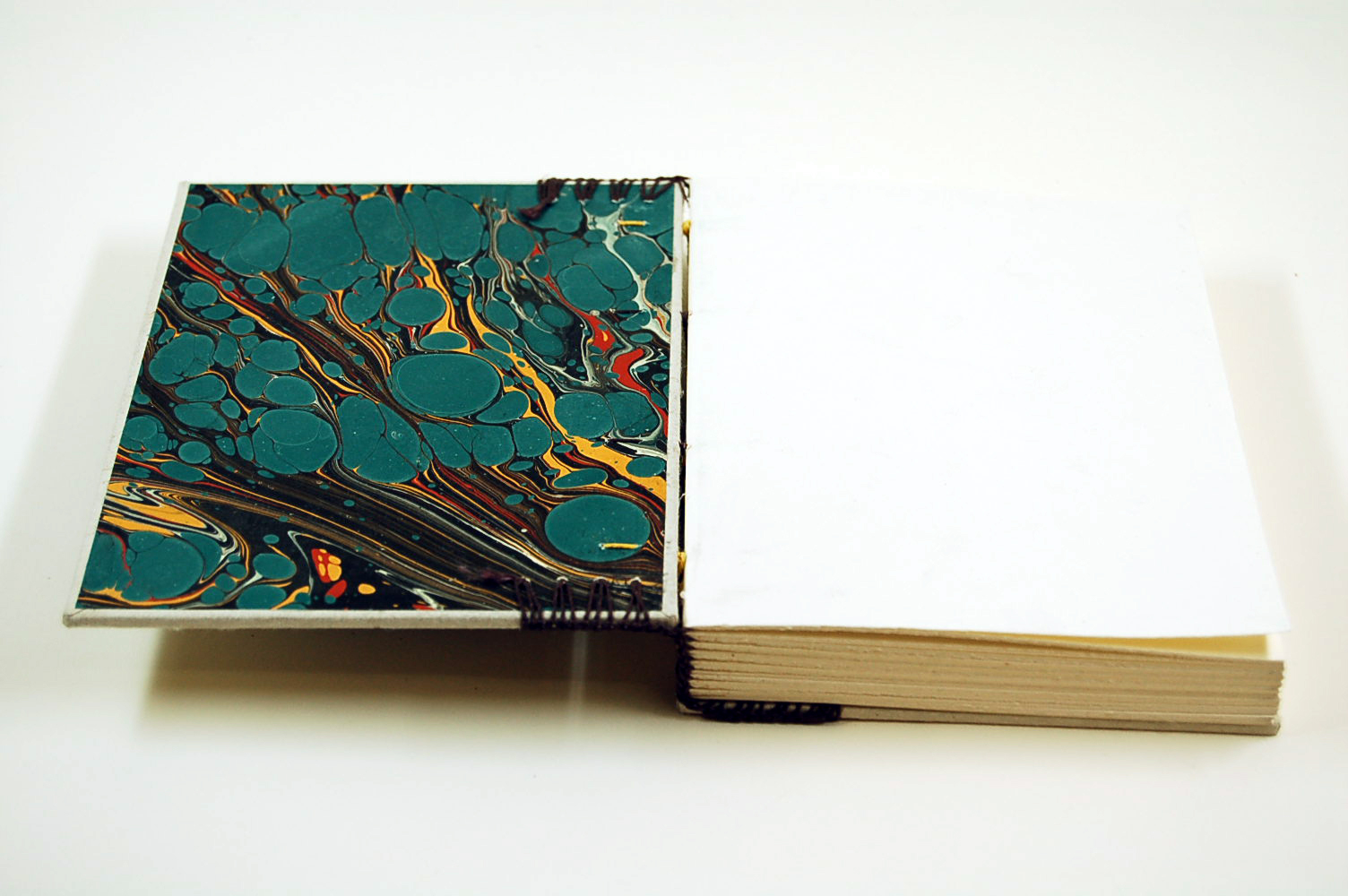
As well as some crazy marbled paper inside.
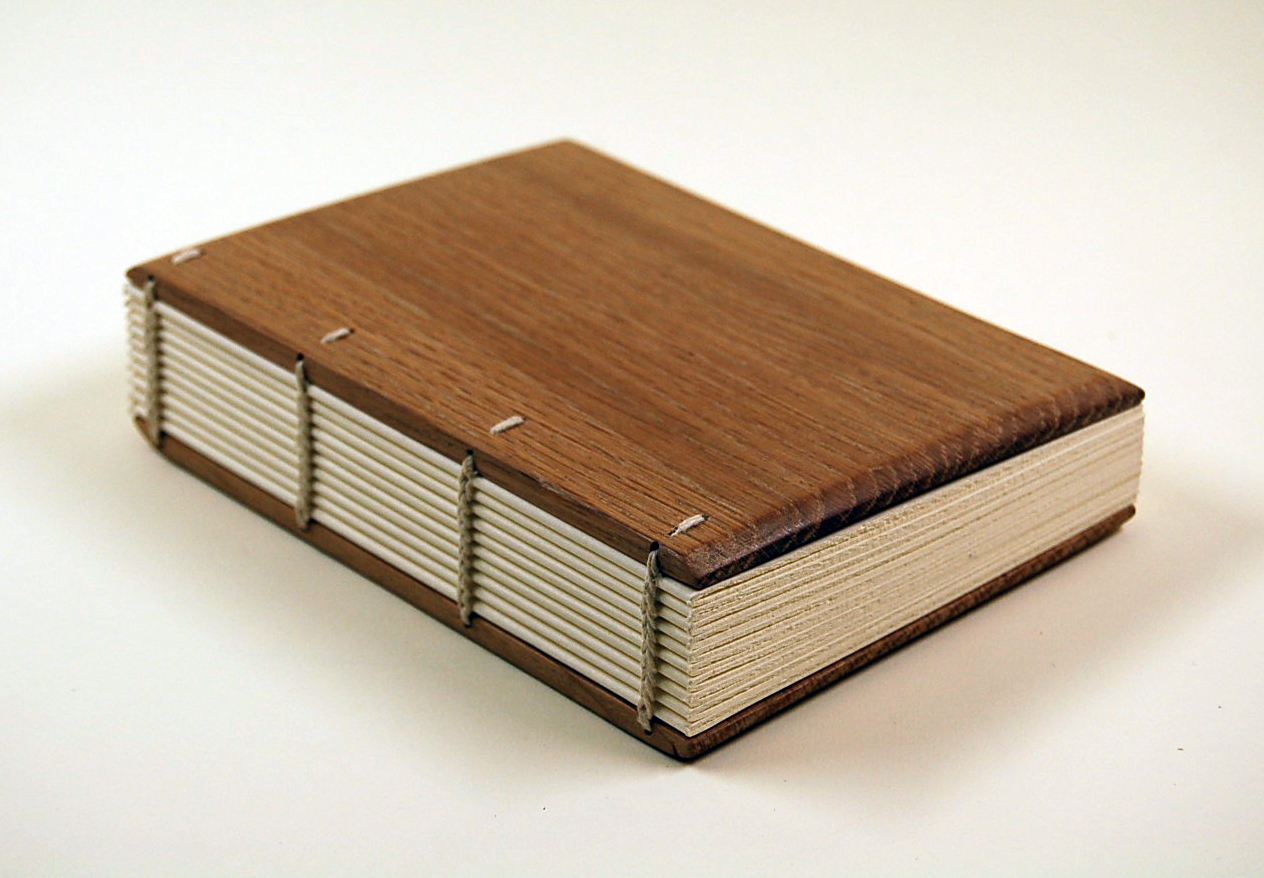
I also created a model with quarter sawn oak boards. The holes in these boards were created with a hand drill (like this one) and the bevel was made with a rasp. They were finished with a light coating of Renaissance Wax and polished.


Finally, I attempted a cloth-covered model with the Ethiopian style of leather headbands. The endbands themselves are made with two strips of leather laced together, and while they look nice enough, they put so much extra material in the joint that the boards splay out. 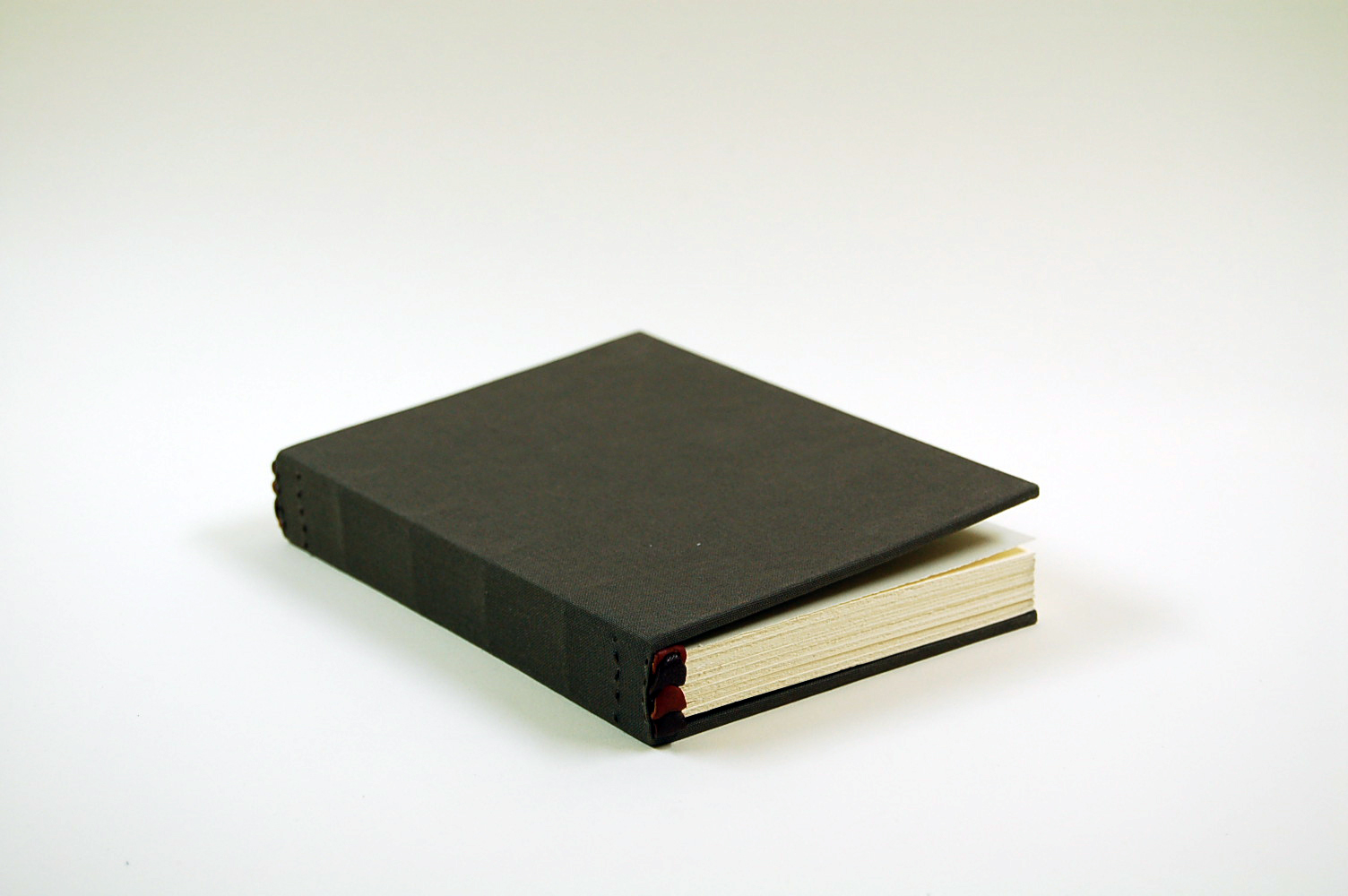

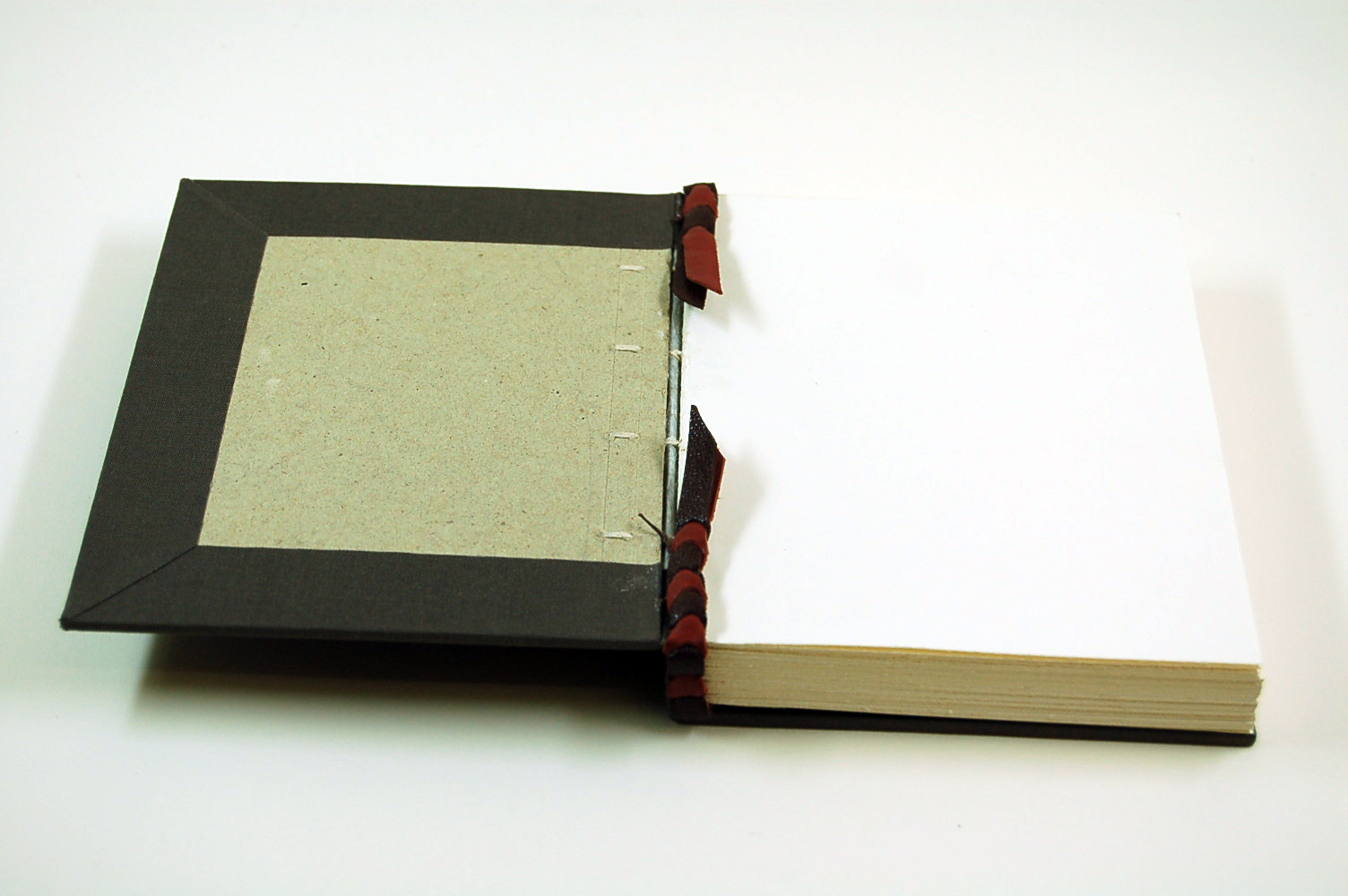
I guess historically these books would be made with wooden boards and completely covered in leather, so the effect wouldn’t be quite so pronounced. But as for this model, I was not so enthusiastic about the result.
In the next few posts I’ll share some other types of non-adhesive bindings, as well as some pictures from our recent knife making/sharpening workshop with Jeff Peachey. Stay tuned!

 Work of the Hand